Aug 8, 2025
Branding at the Speed of Culture.
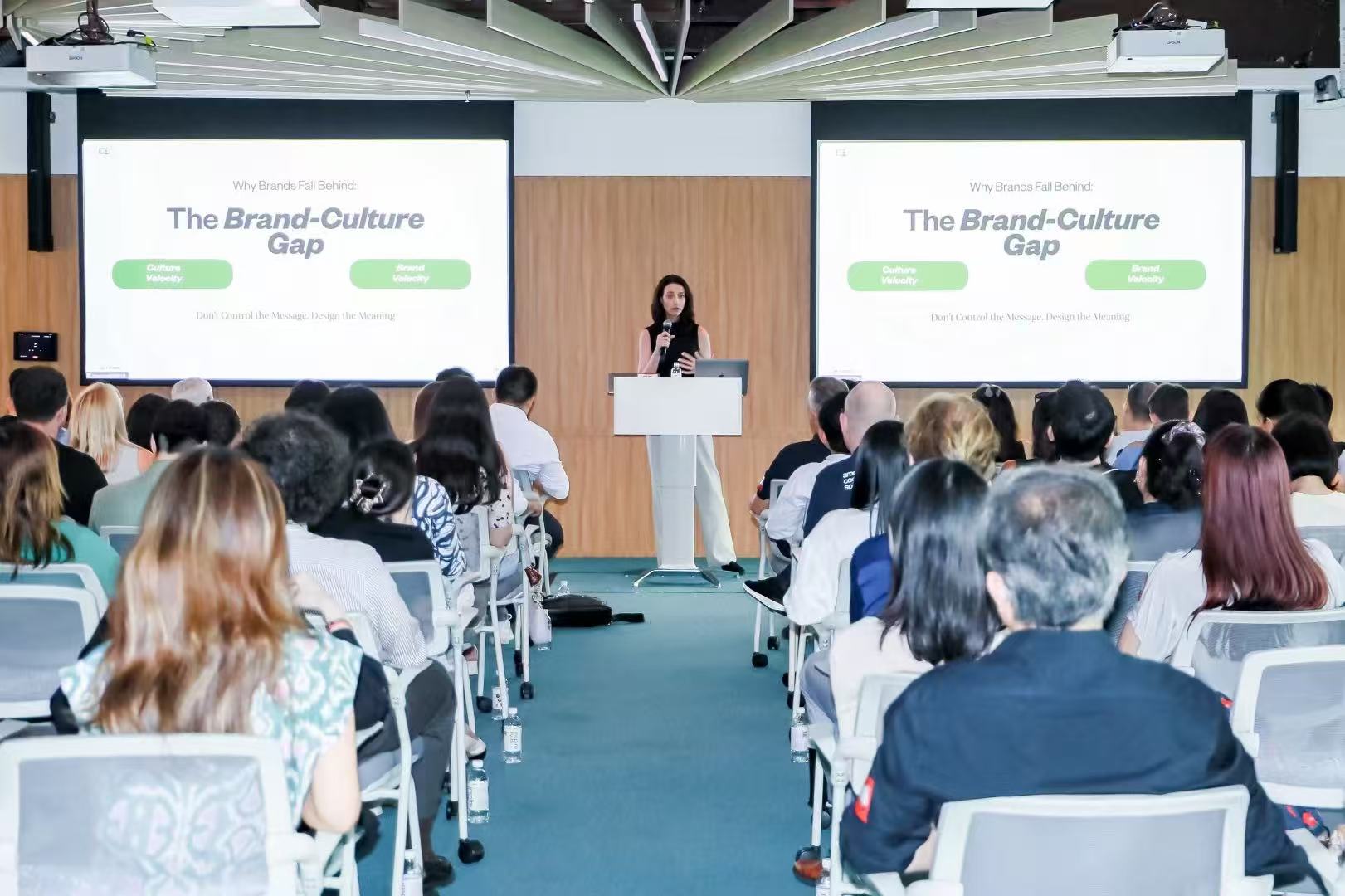
This article is based on a keynote given at Xiaohongshu (RED) HQ in Shanghai, to a packed room of senior executives
Keynote
Thought Piece
Branding
Move with Culture
Why the brands that move with culture are the ones that shape the future, and what it takes to be one of them.
A statement that might be uncomfortable; most brands are already behind.
Not because they lack talent. Not because the strategy is wrong. But because the systems they are running on. The quarterly roadmaps, the global sign-offs, the 360-degree campaigns, were built for a world that no longer exist. We are living in what we call a culture in fast-forward.
Trends rise and fall before brands can write a creative brief. A micro-movement flares and fades before your next Monday stand-up. A Xiaohongshu (Red) post births a new aesthetic overnight, as like a meme that can shift market perception overnight. And by the time your campaign is approved, the moment is gone. This is the new tempo; participatory, decentralized, emotionally charged.
The question is no longer whether your brand can keep up. It's whether you are building for the right game at all.
Mass is over. Meaning is the new luxury.
Globally, we have shifted from owning status symbols to signaling personal meaning.
No one wants to be a mass consumer anymore. People don't want to own the same product as everyone else. Mass brands still exist, but the engines of growth have moved.
The new market is made of micro-tribes: people not just buying a product, but buying access to a world that they want to belong to.
In China, this is especially vivid. 73% of China's Gen Z identify more with niche subcultures than mainstream identity labels. These aren't marketing segments, they are aesthetic tribes, mood-driven enclaves, decentralized rituals. They have visual grammar, shared codes, and their own language. We call them meaning markets. And if your brand gets fluent here, it can move laterally, and virally.
The Culture-Brand Gap is real, and it's widening.
For decades, brands operated like master puppeteers. We controlled the story, the message, the channels. Most brand systems were built for consistency, quarterly strategy decks, static toolkits, global sign-offs. That era is gone. Today, people define your brand in motion, through how it is used, reshared, reinterpreted, even criticised.
Culture is not just a backdrop, it is a co-author. And 69% of Gen Z say they care more about the vibe and community around a product than the product specs themselves. They are not just buying features, they are buying feelings. Signals. Shared energy.
The brands that miss this become static and out-of-sync. Think back to Kodak, a brand that didn't just lose market share, it lost cultural legibility.
Cultural Micro Plays in action.
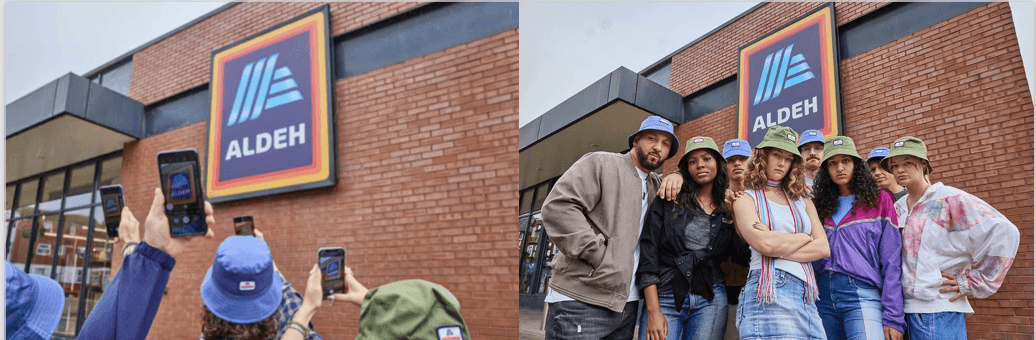
Aldi UK rebranded their Prestwich store 'ALDEH', in true Manchester accent, right next to Heaton Park, where Oasis played their sold-out homecoming gig. It was active in culture, nostalgic, local. The reaction? Crowds queuing for a photo with the sign, an organic UGC explosion across socials, and limited-edition 'Aldimania Bucket Hats' for £4.99. No forced entry, no extra creative budget. Maximum cultural resonance; the brand spoke how people speak and made them feel something.
And then there's Gentle Monster, they do not market. They collaborate with cultural tribes. Their concept stores feel like art installations, it speaks directly in subculture language to fashion-forward youth and streetwear communities who advocate a futuristic chaos aesthetic. Reach comes from belonging.
Introducing MDBX:
A Cultural Operating system for brands.
Traditional brand strategy was built for linearity. Culture however is alive, non-linear, emergent. It doesn't move in a funnel it ripples.
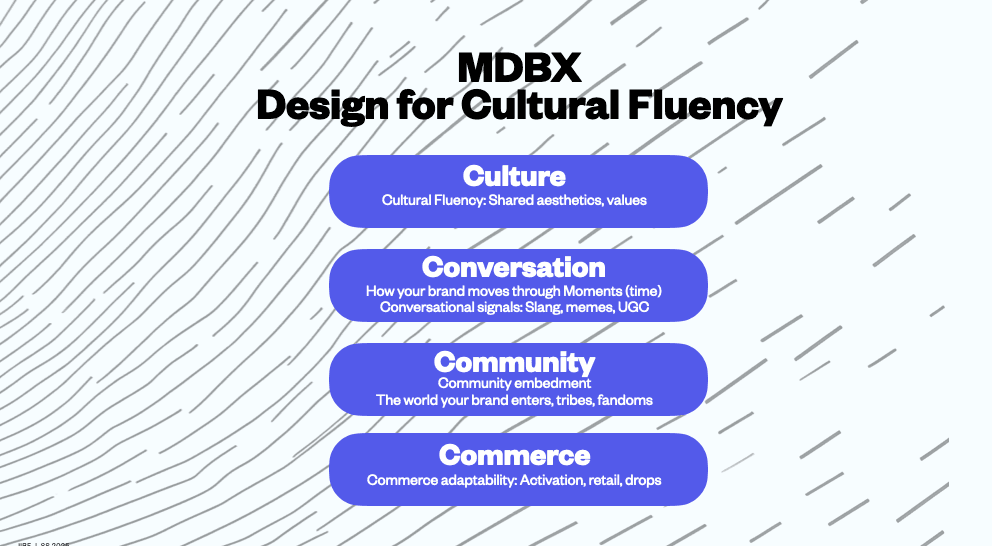
So at Jibe, we developed a model to activate those ripples. MDBX: Multi-Dimensional Brand Experience. Think of it as a cultural operating system for brands at the edge of culture; fluid, real-time, and cultural by design. MDBX works across four interconnected layers:
Culture: The source code. What people care about and feel part of.
Aesthetics, values, mood.Community: Who they share it with. Fandoms, style tribes, shared codes.
Think Sneakerheads or Hanfu Revivalists.Conversation: How they express it. Cutlure lives in memes, slang, trending sounds. Brands here become fluent, not loud.
Commerce: Where and how they transact. Through product drops, social shopping, pop-ups that feel like home.
Together, this system turns your brand into an interface with culture; dynamic, layered, and responsive. You don't just push meaning, you become magnetic, building brand gravity.
The data backs this up. Culturally native commerce converts 40% faster than traditional e-commerce. Community-activated campaigns generate 2.5x higher engagement. And visual discovery drives 3x higher purchase intent than text-based search. This isn't soft, it's a growth lever.
5 Moves to Make Now
Building cultural reflex doesn't mean reacting to every meme. It means building a system, a muscle, that lets you observe, interpret, and respond to culture at speed. Here's where to start:
Treat cultural immersion as a business requirement, not a nice-to-have.
Build systems that are fluid instead of static guidelines.
Apply MDBX layer thinking to your brand architecture.
Unlock the true potential of offline, that's where subcultures crystallise.
Leverage community as your brand's social architecture.
We're in the meaning business.
Culture will never slow down, but then again it is not about catching up.
The future doesn't belong to the loudest brands, it belongs to the most meaningful ones.


Aug 8, 2025
Branding at the Speed of Culture.
This article is based on a keynote given at Xiaohongshu (RED) HQ in Shanghai, to a packed room of senior executives
Keynote
Thought Piece
Branding
Move with Culture
Why the brands that move with culture are the ones that shape the future, and what it takes to be one of them.
A statement that might be uncomfortable; most brands are already behind.
Not because they lack talent. Not because the strategy is wrong. But because the systems they are running on. The quarterly roadmaps, the global sign-offs, the 360-degree campaigns, were built for a world that no longer exist. We are living in what we call a culture in fast-forward.
Trends rise and fall before brands can write a creative brief. A micro-movement flares and fades before your next Monday stand-up. A Xiaohongshu (Red) post births a new aesthetic overnight, as like a meme that can shift market perception overnight. And by the time your campaign is approved, the moment is gone. This is the new tempo; participatory, decentralized, emotionally charged.
The question is no longer whether your brand can keep up. It's whether you are building for the right game at all.
Mass is over. Meaning is the new luxury.
Globally, we have shifted from owning status symbols to signaling personal meaning.
No one wants to be a mass consumer anymore. People don't want to own the same product as everyone else. Mass brands still exist, but the engines of growth have moved.
The new market is made of micro-tribes: people not just buying a product, but buying access to a world that they want to belong to.
In China, this is especially vivid. 73% of China's Gen Z identify more with niche subcultures than mainstream identity labels. These aren't marketing segments, they are aesthetic tribes, mood-driven enclaves, decentralized rituals. They have visual grammar, shared codes, and their own language. We call them meaning markets. And if your brand gets fluent here, it can move laterally, and virally.
The Culture-Brand Gap is real, and it's widening.
For decades, brands operated like master puppeteers. We controlled the story, the message, the channels. Most brand systems were built for consistency, quarterly strategy decks, static toolkits, global sign-offs. That era is gone. Today, people define your brand in motion, through how it is used, reshared, reinterpreted, even criticised.
Culture is not just a backdrop, it is a co-author. And 69% of Gen Z say they care more about the vibe and community around a product than the product specs themselves. They are not just buying features, they are buying feelings. Signals. Shared energy.
The brands that miss this become static and out-of-sync. Think back to Kodak, a brand that didn't just lose market share, it lost cultural legibility.
Cultural Micro Plays in action.
Aldi UK rebranded their Prestwich store 'ALDEH', in true Manchester accent, right next to Heaton Park, where Oasis played their sold-out homecoming gig. It was active in culture, nostalgic, local. The reaction? Crowds queuing for a photo with the sign, an organic UGC explosion across socials, and limited-edition 'Aldimania Bucket Hats' for £4.99. No forced entry, no extra creative budget. Maximum cultural resonance; the brand spoke how people speak and made them feel something.
And then there's Gentle Monster, they do not market. They collaborate with cultural tribes. Their concept stores feel like art installations, it speaks directly in subculture language to fashion-forward youth and streetwear communities who advocate a futuristic chaos aesthetic. Reach comes from belonging.
Introducing MDBX:
A Cultural Operating system for brands.
Traditional brand strategy was built for linearity. Culture however is alive, non-linear, emergent. It doesn't move in a funnel it ripples.
So at Jibe, we developed a model to activate those ripples. MDBX: Multi-Dimensional Brand Experience. Think of it as a cultural operating system for brands at the edge of culture; fluid, real-time, and cultural by design. MDBX works across four interconnected layers:
Culture: The source code. What people care about and feel part of.
Aesthetics, values, mood.Community: Who they share it with. Fandoms, style tribes, shared codes.
Think Sneakerheads or Hanfu Revivalists.Conversation: How they express it. Cutlure lives in memes, slang, trending sounds. Brands here become fluent, not loud.
Commerce: Where and how they transact. Through product drops, social shopping, pop-ups that feel like home.
Together, this system turns your brand into an interface with culture; dynamic, layered, and responsive. You don't just push meaning, you become magnetic, building brand gravity.
The data backs this up. Culturally native commerce converts 40% faster than traditional e-commerce. Community-activated campaigns generate 2.5x higher engagement. And visual discovery drives 3x higher purchase intent than text-based search. This isn't soft, it's a growth lever.
5 Moves to Make Now
Building cultural reflex doesn't mean reacting to every meme. It means building a system, a muscle, that lets you observe, interpret, and respond to culture at speed. Here's where to start:
Treat cultural immersion as a business requirement, not a nice-to-have.
Build systems that are fluid instead of static guidelines.
Apply MDBX layer thinking to your brand architecture.
Unlock the true potential of offline, that's where subcultures crystallise.
Leverage community as your brand's social architecture.
We're in the meaning business.
Culture will never slow down, but then again it is not about catching up.
The future doesn't belong to the loudest brands, it belongs to the most meaningful ones.
Aug 8, 2025
Branding at the Speed of Culture.
This article is based on a keynote given at Xiaohongshu (RED) HQ in Shanghai, to a packed room of senior executives
Keynote
Thought Piece
Branding
Move with Culture
Why the brands that move with culture are the ones that shape the future, and what it takes to be one of them.
A statement that might be uncomfortable; most brands are already behind.
Not because they lack talent. Not because the strategy is wrong. But because the systems they are running on. The quarterly roadmaps, the global sign-offs, the 360-degree campaigns, were built for a world that no longer exist. We are living in what we call a culture in fast-forward.
Trends rise and fall before brands can write a creative brief. A micro-movement flares and fades before your next Monday stand-up. A Xiaohongshu (Red) post births a new aesthetic overnight, as like a meme that can shift market perception overnight. And by the time your campaign is approved, the moment is gone. This is the new tempo; participatory, decentralized, emotionally charged.
The question is no longer whether your brand can keep up. It's whether you are building for the right game at all.
Mass is over. Meaning is the new luxury.
Globally, we have shifted from owning status symbols to signaling personal meaning.
No one wants to be a mass consumer anymore. People don't want to own the same product as everyone else. Mass brands still exist, but the engines of growth have moved.
The new market is made of micro-tribes: people not just buying a product, but buying access to a world that they want to belong to.
In China, this is especially vivid. 73% of China's Gen Z identify more with niche subcultures than mainstream identity labels. These aren't marketing segments, they are aesthetic tribes, mood-driven enclaves, decentralized rituals. They have visual grammar, shared codes, and their own language. We call them meaning markets. And if your brand gets fluent here, it can move laterally, and virally.
The Culture-Brand Gap is real, and it's widening.
For decades, brands operated like master puppeteers. We controlled the story, the message, the channels. Most brand systems were built for consistency, quarterly strategy decks, static toolkits, global sign-offs. That era is gone. Today, people define your brand in motion, through how it is used, reshared, reinterpreted, even criticised.
Culture is not just a backdrop, it is a co-author. And 69% of Gen Z say they care more about the vibe and community around a product than the product specs themselves. They are not just buying features, they are buying feelings. Signals. Shared energy.
The brands that miss this become static and out-of-sync. Think back to Kodak, a brand that didn't just lose market share, it lost cultural legibility.
Cultural Micro Plays in action.
Aldi UK rebranded their Prestwich store 'ALDEH', in true Manchester accent, right next to Heaton Park, where Oasis played their sold-out homecoming gig. It was active in culture, nostalgic, local. The reaction? Crowds queuing for a photo with the sign, an organic UGC explosion across socials, and limited-edition 'Aldimania Bucket Hats' for £4.99. No forced entry, no extra creative budget. Maximum cultural resonance; the brand spoke how people speak and made them feel something.
And then there's Gentle Monster, they do not market. They collaborate with cultural tribes. Their concept stores feel like art installations, it speaks directly in subculture language to fashion-forward youth and streetwear communities who advocate a futuristic chaos aesthetic. Reach comes from belonging.
Introducing MDBX:
A Cultural Operating system for brands.
Traditional brand strategy was built for linearity. Culture however is alive, non-linear, emergent. It doesn't move in a funnel it ripples.
So at Jibe, we developed a model to activate those ripples. MDBX: Multi-Dimensional Brand Experience. Think of it as a cultural operating system for brands at the edge of culture; fluid, real-time, and cultural by design. MDBX works across four interconnected layers:
Culture: The source code. What people care about and feel part of.
Aesthetics, values, mood.Community: Who they share it with. Fandoms, style tribes, shared codes.
Think Sneakerheads or Hanfu Revivalists.Conversation: How they express it. Cutlure lives in memes, slang, trending sounds. Brands here become fluent, not loud.
Commerce: Where and how they transact. Through product drops, social shopping, pop-ups that feel like home.
Together, this system turns your brand into an interface with culture; dynamic, layered, and responsive. You don't just push meaning, you become magnetic, building brand gravity.
The data backs this up. Culturally native commerce converts 40% faster than traditional e-commerce. Community-activated campaigns generate 2.5x higher engagement. And visual discovery drives 3x higher purchase intent than text-based search. This isn't soft, it's a growth lever.
5 Moves to Make Now
Building cultural reflex doesn't mean reacting to every meme. It means building a system, a muscle, that lets you observe, interpret, and respond to culture at speed. Here's where to start:
Treat cultural immersion as a business requirement, not a nice-to-have.
Build systems that are fluid instead of static guidelines.
Apply MDBX layer thinking to your brand architecture.
Unlock the true potential of offline, that's where subcultures crystallise.
Leverage community as your brand's social architecture.
We're in the meaning business.
Culture will never slow down, but then again it is not about catching up.
The future doesn't belong to the loudest brands, it belongs to the most meaningful ones.